If you’re bringing a supplement to market, you’ll almost certainly work with a contract manufacturer rather than build your own facility — the equipment, GMP compliance, and testing infrastructure cost far more than any single brand can justify. This page explains how that relationship actually works: the two paths into production, the steps a product moves through, realistic timelines and order minimums, and how the major formats differ. It’s the overview; for the details of any one format, the format-specific guides go deeper.
Two paths: private label vs. custom formulation
Almost every project starts with one decision, and it drives cost, speed, and how different your product can be.
Private label means you choose an existing, already-developed and stability-tested formula from the manufacturer’s catalog and apply your own branding and packaging. It’s the faster, lower-cost, lower-risk path — ideal for testing a market or launching quickly — but your product is, by definition, similar to others built on the same base formula.
Custom (contract) formulation means developing a proprietary formula from scratch or modifying one heavily. You control the ingredients, doses, and the product’s story, and you own that formula. The tradeoff is time and cost: it adds R&D, pilot runs, and stability testing before you can produce at scale.
A simple way to choose: private label if speed and budget matter most and a proven formula is fine; custom if differentiation and owning your formula are the point. Many brands start private label to validate demand, then move to custom once a product sells.
The manufacturing process, step by step
Whichever path you take, a supplement moves through roughly the same stages:
- Concept and formulation. Either you bring a formula, or the manufacturer’s R&D team builds one to a target benefit, ingredient list, and budget. Custom formulas iterate here; private label skips most of it.
- Ingredient sourcing and incoming testing. Raw materials are procured and then tested for identity, potency, and purity before they enter production — using methods like FT-IR spectroscopy for identity and microbiological screening for contamination. This is a GMP requirement, not an optional step.
- Production. The blend is manufactured into your chosen format (capsule, tablet, softgel, powder, gummy). In-process checks monitor things like mix uniformity, content uniformity, and disintegration.
- Finished-product testing. The completed product is tested again for potency, purity, and microbial content, and a Certificate of Analysis (CoA) is generated for that batch.
- Packaging and labeling. Filling, bottling or pouching, labeling, and any shrink-wrapping — with label content that meets FDA/FTC requirements.
- Fulfillment. The finished goods ship to you or directly into your distribution channel.
The testing at steps 2 and 4 is what separates a real GMP manufacturer from an order-filler. Every batch should come with a CoA and full traceability of raw materials back to their suppliers.
Realistic timelines
This is where brands are most often misled, so here are honest ranges from across the industry:
- Private label / stock formula: roughly 4–8 weeks, because the formula already exists and is stability-tested.
- Custom formula from scratch: typically 12–16 weeks (some put first-time custom productions at 14–18 weeks), because R&D, pilot testing, and stability verification all happen before full production.
- Repeat orders are faster than first runs, since sourcing and benchwork are already done.
Be skeptical of any manufacturer promising a 4-week turnaround on a brand-new custom formula — that timeline only applies to established or stock formulas. Single-ingredient products also move faster than complex multi-ingredient blends. Ingredient supply chains for rare or seasonal raw materials can extend any of these.
Minimum order quantities (MOQs)
MOQs vary by manufacturer, format, and packaging, but the patterns are consistent:
- Common starting MOQs for accessible manufacturers run around 1,000–2,500 units, which is where most startups begin.
- Format matters: tablets and capsules tend to have lower MOQs, while custom softgels and gummies often require higher minimums — those production lines are more complex and costly to set up and clean between runs, so manufacturers need a larger run to justify them.
- Plan an MOQ ladder. A sensible approach is to start small (e.g., 1,000–2,500 units) to test the market, then scale to larger runs as reorders justify better pricing. Bringing a demand forecast to the conversation helps you negotiate.
The major formats at a glance
Your format determines cost, MOQ, swallowability, and which equipment runs your product:
- Capsules (two-piece) — flexible, run dry powders or blends, generally low MOQs. Good default for most powder formulas.
- Tablets — compressed powder, cost-efficient at volume, good for high doses; require binders and a compression step.
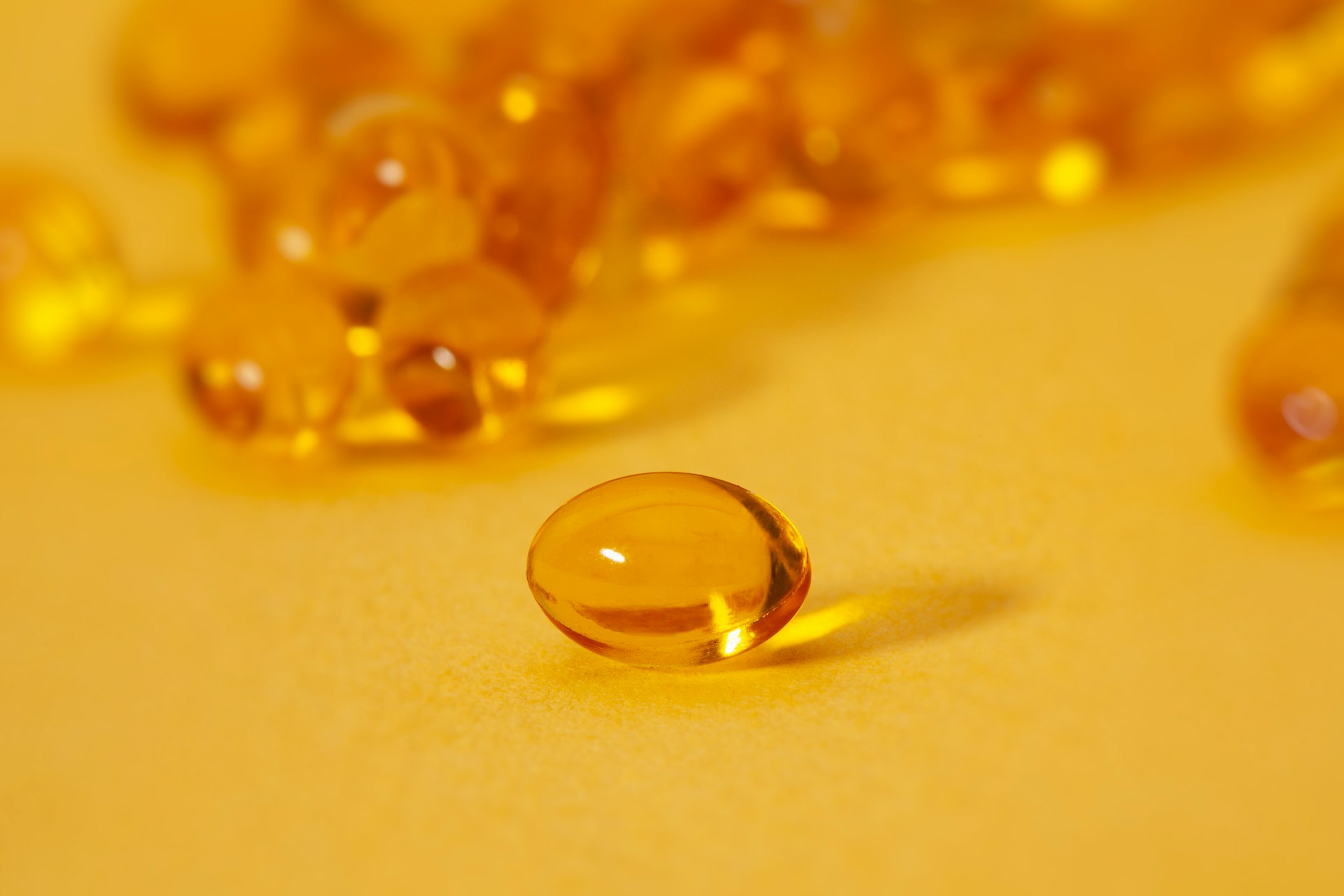
- Softgels — liquid or oil-based fills in a sealed shell; specialized equipment, often higher MOQs. Best for oils and lipid-soluble actives.
- Powders — protein, pre-workout, greens; sold by weight in tubs or sachets, no encapsulation step.
- Gummies — high consumer appeal, but the most complex to formulate and manufacture, with higher MOQs.
Each of these has its own considerations — sizing, fill types, materials — covered in the format-specific guides.
What to bring to a manufacturer
To get a real quote instead of a vague one:
- Whether you want private label or custom
- Your formula or concept (target benefit, key ingredients, doses)
- Your preferred format, or openness to a recommendation
- Run size and any launch timeline
- Label claims you need (vegan, non-GMO, organic, etc.), since these constrain ingredients and packaging
- Your packaging preference (bottle, pouch, stick pack, blister)
How to choose a supplement manufacturer
A few questions reveal whether a manufacturer is a fit:
- Are they GMP-compliant, with documented testing and a CoA for every batch?
- Do they run your format in-house, or outsource it?
- What’s the realistic MOQ and lead time for your format and path (private label vs. custom)?
- Can they formulate, or only fill an existing formula?
- Will you have a dedicated point of contact and transparent timeline updates? Reliability comes down to communication.
- Can they scale if your product takes off, without forcing a huge first commitment?
Supplement manufacturing rewards understanding the process before you start: which path fits your goals, what’s realistic on time and minimums, and which format serves your formula. Alaska Spring Pharmaceuticals is a GMP-compliant supplement manufacturer in Westbury, New York, producing capsules, tablets, softgels, powders, and gummies with typical turnaround of 4–6 weeks for established formulas. If you’d like a clear quote with timelines and MOQs for your project, reach out to start the conversation.